Industrial facilities often handle large, heavy, and bulky materials that cannot be moved efficiently through manual methods alone. Manufacturing plants, warehouses, construction facilities, shipyards, and steel processing units rely on specialized equipment to transport materials safely and efficiently within operational areas.
One of the most widely used solutions for heavy-duty lifting and movement is the industrial overhead crane. These systems are designed to lift, transport, position, and lower heavy loads across a defined workspace while helping improve productivity and workplace safety.
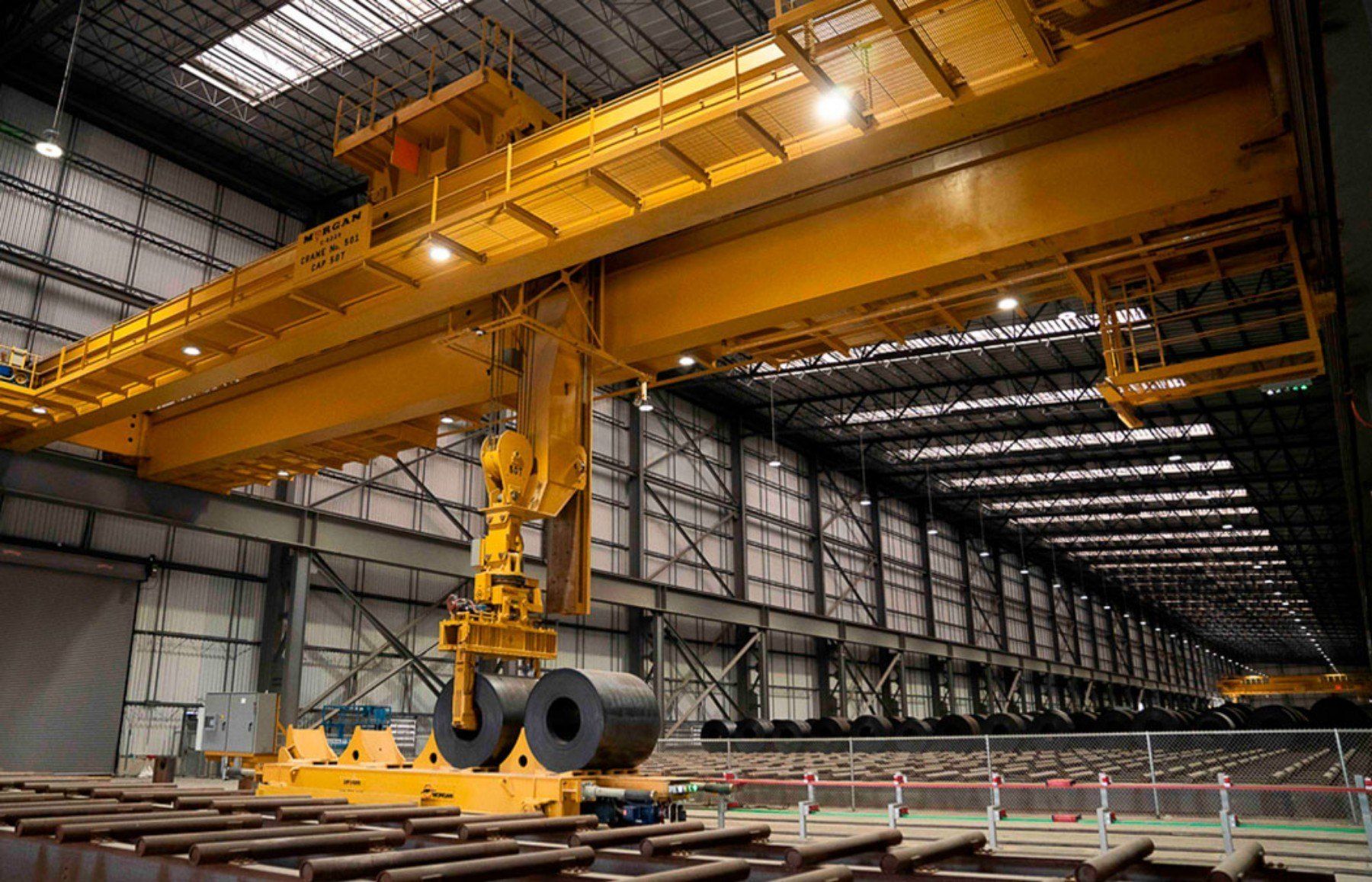
This guide explains how industrial overhead crane machinery works, its major components, types, applications, and the role it plays in modern material handling operations.
What Is an Industrial Overhead Crane?
An industrial overhead crane is a lifting system installed above a work area that moves loads horizontally and vertically within a facility.
Unlike forklifts or ground-based equipment, overhead cranes operate on elevated runways or support structures, allowing materials to be transported without occupying floor space.
Overhead cranes are commonly used for:
Heavy equipment movement
Raw material handling
Manufacturing operations
Warehouse logistics
Assembly processes
Steel and metal handling
Construction material transport
These systems are designed to move loads efficiently while minimizing manual handling requirements.
How Industrial Overhead Cranes Work
An overhead crane operates through a combination of lifting and movement mechanisms.
The basic process involves:
Load Attachment
The load is secured using hooks, slings, magnets, grabs, or specialized lifting devices.
Vertical Lifting
A hoist raises the material from its original position.
Horizontal Travel
The trolley carrying the hoist moves along the crane bridge.
Bridge Movement
The bridge travels across runway rails, allowing the load to move throughout the work area.
Load Placement
The crane lowers the material at the designated location.
This coordinated movement allows operators to transport heavy materials with precision.
Main Components of an Overhead Crane
Several components work together to create an effective lifting system.
Bridge
The bridge is the primary horizontal beam that spans the working area.
It supports the trolley and hoist while moving along runway rails.
Hoist
The hoist performs the lifting and lowering function.
Hoists may use:
Wire ropes
Chains
Electric motors
Mechanical lifting mechanisms
The hoist determines much of the crane's lifting capability.
Trolley
The trolley moves along the bridge and carries the hoist.
This movement provides side-to-side positioning of the load.
Runway System
Runways support bridge travel throughout the operational area.
They are typically mounted on building structures or dedicated support columns.
Control System
Controls allow operators to manage lifting, lowering, and movement functions.
Common control methods include:
Pendant controls
Radio remote controls
Cabin controls
Automated control systems
Types of Industrial Overhead Cranes
Different crane configurations are available depending on operational requirements.
Single Girder Overhead Crane
A single girder crane uses one primary bridge beam.
Characteristics include:
Compact design
Efficient use of space
Suitable for moderate lifting capacities
Common use in manufacturing and warehouses
Single girder systems are often selected for general material handling applications.
Double Girder Overhead Crane
Double girder cranes use two bridge beams for increased strength and capacity.
Advantages include:
Higher lifting capacities
Greater lifting heights
Enhanced structural stability
Support for larger industrial operations
These cranes are commonly used in heavy manufacturing environments.
Top Running Overhead Crane
In top-running systems, the bridge travels on rails mounted on top of runway beams.
Benefits include:
Maximum lifting height
Larger span capabilities
High-capacity operation
Top-running cranes are frequently used in large industrial facilities.
Under Running Overhead Crane
Under-running cranes operate beneath runway beams.
Advantages include:
Efficient use of building structures
Suitable for smaller facilities
Flexible installation options
These systems are commonly used where overhead space is limited.
Industrial Applications of Overhead Cranes
Industrial overhead cranes serve a wide range of industries.
Manufacturing Facilities
Manufacturers use cranes to move:
Machinery components
Raw materials
Production equipment
Finished products
Efficient movement supports streamlined production processes.
Steel and Metal Processing
Metal processing facilities often handle extremely heavy materials.
Cranes transport:
Steel coils
Metal sheets
Structural components
Fabricated assemblies
High-capacity lifting capabilities make cranes essential in these environments.
Warehouses and Distribution Centers
Overhead cranes help manage:
Bulk inventory
Heavy pallets
Equipment handling
Storage operations
They improve workflow efficiency while reducing floor congestion.
Construction Material Handling
Construction operations use cranes to move:
Structural steel
Concrete components
Heavy building materials
Equipment assemblies
Precise load positioning supports construction activities.
Shipbuilding and Marine Operations
Shipyards use overhead cranes for:
Hull sections
Marine engines
Heavy assemblies
Large structural components
Large lifting capacities are particularly important in these environments.
Benefits of Industrial Overhead Crane Machinery
Overhead cranes provide several operational advantages.
Improved Material Handling Efficiency
Heavy materials can be moved quickly across large work areas.
This reduces delays and improves workflow continuity.
Better Space Utilization
Since cranes operate above ground level, floor space remains available for production and storage activities.
Enhanced Workplace Safety
Manual lifting of heavy loads can increase workplace risks.
Overhead cranes help reduce direct manual handling and support safer material movement.
Increased Productivity
Efficient load transport allows employees to spend less time moving materials and more time focusing on operational tasks.
Precise Load Positioning
Modern cranes provide accurate movement and positioning capabilities.
This precision supports assembly operations and equipment installation activities.
Load Capacity Considerations
Selecting the appropriate crane requires evaluating load requirements.
Factors include:
Maximum load weight
Lift frequency
Material dimensions
Travel distances
Future operational needs
Proper capacity selection supports safe and efficient operation.
Safety Features in Modern Overhead Cranes
Modern industrial cranes often incorporate various safety systems.
Examples include:
Overload protection devices
Emergency stop controls
Limit switches
Collision avoidance systems
Load monitoring equipment
Warning alarms
These features help reduce operational risks and improve workplace safety.
Maintenance and Inspection
Regular maintenance is essential for reliable crane operation.
Typical maintenance activities include:
Hoist inspections
Wire rope examinations
Brake testing
Lubrication procedures
Electrical system checks
Structural inspections
Routine inspections help identify potential issues before they affect performance.
Automation in Overhead Crane Systems
Many modern facilities are integrating automation into crane operations.
Automated features may include:
Programmable movement paths
Automated load positioning
Inventory integration
Remote monitoring
Data collection systems
Automation can improve consistency, efficiency, and operational visibility.
Choosing the Right Overhead Crane
When selecting an industrial overhead crane, organizations typically evaluate:
Lifting capacity requirements
Building dimensions
Available headroom
Operational frequency
Load characteristics
Future expansion plans
A thorough assessment helps ensure that the selected system aligns with operational objectives.
Conclusion
Industrial overhead crane machinery plays a vital role in heavy-duty material handling across numerous industries. By providing efficient lifting, transportation, and positioning of heavy loads, these systems help improve productivity, enhance safety, and optimize facility operations.
From manufacturing plants and warehouses to shipyards and steel processing facilities, overhead cranes support the movement of materials that would otherwise be difficult to handle. Understanding crane types, components, applications, and operational considerations helps businesses select solutions that meet their material handling requirements while supporting long-term operational efficiency.