Printed Circuit Boards (PCBs) form the foundation of nearly every modern electronic device. From smartphones and computers to medical equipment and industrial automation systems, PCBs provide the platform that connects electronic components and enables devices to function efficiently.
As electronic products become more advanced and compact, manufacturers increasingly rely on automated PCB assembly to improve production speed, consistency, and quality. Automation has transformed electronics manufacturing by reducing manual processes and supporting high-volume production requirements.
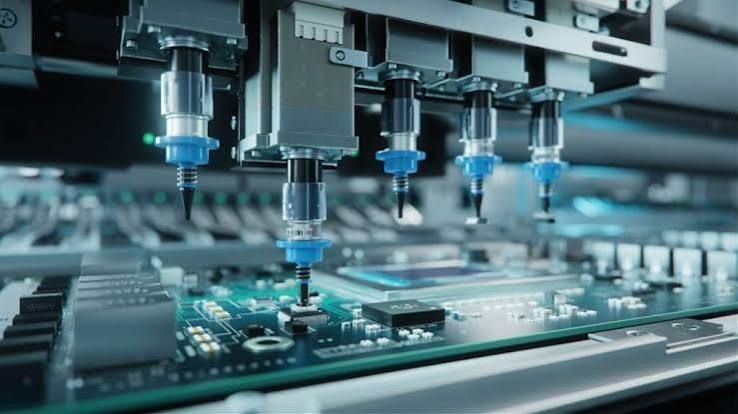
This guide explains how automated PCB assembly works, its key technologies, benefits, applications, and its role in modern electronics manufacturing.
What Is Automated PCB Assembly?
Automated PCB assembly is the process of using specialized machinery and software to place, solder, inspect, and test electronic components on printed circuit boards.
Instead of relying primarily on manual assembly methods, automated systems perform many production tasks with precision and repeatability.
Automated PCB assembly commonly includes:
- Component placement
- Solder paste application
- Soldering processes
- Optical inspection
- Quality testing
- Material handling
- Production monitoring
Automation helps manufacturers produce electronic assemblies more efficiently while maintaining consistent quality standards.
Understanding Printed Circuit Boards
A printed circuit board serves as the structural and electrical foundation of an electronic device.
PCBs contain conductive pathways that connect electronic components such as:
- Resistors
- Capacitors
- Integrated circuits
- Connectors
- Sensors
- Processors
- Power management devices
These components work together to perform the intended functions of the electronic product.
Why PCB Assembly Is Important
PCB assembly converts a bare circuit board into a functional electronic assembly.
Accurate component placement and reliable electrical connections are critical because even minor errors can affect product performance.
Effective PCB assembly helps ensure:
- Proper circuit operation
- Product reliability
- Electrical performance
- Manufacturing consistency
- Long-term durability
As electronic devices continue to become more sophisticated, assembly precision becomes increasingly important.
How Automated PCB Assembly Works
Automated PCB assembly follows a structured manufacturing workflow.
Design Preparation
Production begins with design files generated during product development.
These files contain information about:
- Component locations
- Circuit layouts
- Assembly requirements
- Production instructions
Manufacturing equipment uses this data to guide assembly operations.
Solder Paste Application
A stencil printing system applies solder paste to designated areas on the PCB.
The solder paste creates temporary attachment points for electronic components and supports the soldering process.
Accurate paste application is essential for reliable electrical connections.
Automated Component Placement
Pick-and-place machines position electronic components onto the circuit board.
Using advanced vision systems and robotic mechanisms, these machines can place thousands of components per hour with high accuracy.
The system identifies each component and places it in its designated location according to the assembly program.
Reflow Soldering
After component placement, the PCB enters a reflow oven.
During this process:
- The board is gradually heated.
- The solder paste melts.
- Electrical connections are formed.
- The board cools and solidifies.
Reflow soldering creates permanent connections between components and the PCB.
Inspection and Verification
Automated inspection systems examine the assembled board for potential issues.
Inspection processes may identify:
- Missing components
- Incorrect placement
- Soldering defects
- Alignment problems
- Manufacturing inconsistencies
Early defect detection helps improve overall production quality.
Functional Testing
Completed assemblies may undergo electrical testing to verify proper operation.
Testing helps confirm:
- Circuit functionality
- Signal integrity
- Power distribution
- Component performance
Functional verification supports product reliability before shipment.
Key Technologies Used in Automated PCB Assembly
Modern PCB manufacturing facilities rely on several advanced technologies.
Pick-and-Place Machines
Pick-and-place equipment automates component placement.
These systems use:
- Robotic placement heads
- High-speed feeders
- Vision alignment systems
- Precision positioning controls
They are among the most important machines in PCB assembly production.
Automated Optical Inspection
Automated Optical Inspection (AOI) systems use cameras and image analysis software to inspect assembled boards.
AOI systems help identify:
- Missing components
- Orientation errors
- Solder defects
- Placement inaccuracies
Inspection automation improves quality control efficiency.
Reflow Ovens
Reflow ovens perform controlled heating processes that create solder joints between components and the PCB.
Temperature management is carefully controlled to protect components and ensure reliable connections.
Automated Testing Systems
Testing equipment verifies that assemblies function according to design specifications.
Testing methods may include:
- Electrical testing
- In-circuit testing
- Functional testing
- Signal analysis
These systems help detect manufacturing defects before products reach end users.
Benefits of Automated PCB Assembly
Automation provides numerous advantages for electronics manufacturers.
Improved Production Speed
Automated equipment can assemble large volumes of PCBs much faster than manual methods.
This supports high-volume manufacturing requirements.
Greater Accuracy
Automated systems position components with exceptional precision.
Accurate placement reduces assembly errors and improves product quality.
Consistent Manufacturing Quality
Automation helps maintain consistent production standards across large manufacturing runs.
Consistency supports product reliability and customer satisfaction.
Reduced Human Error
Many repetitive assembly tasks are performed automatically, reducing the likelihood of manual mistakes.
Enhanced Traceability
Modern manufacturing systems often record detailed production data.
Traceability helps support quality control, troubleshooting, and process improvement efforts.
Industries Using Automated PCB Assembly
Automated PCB assembly supports a wide range of industries.
Consumer Electronics
Examples include:
- Smartphones
- Tablets
- Computers
- Smart home devices
Automotive Electronics
Modern vehicles contain numerous electronic systems, including:
- Driver assistance technologies
- Infotainment systems
- Engine control units
- Battery management systems
Medical Devices
Medical equipment often requires highly reliable electronic assemblies.
Applications include:
- Diagnostic systems
- Monitoring devices
- Imaging equipment
- Laboratory instruments
Industrial Automation
Factories use electronic control systems for machinery and production equipment.
PCB assemblies support sensors, controllers, and automation platforms.
Telecommunications
Communication infrastructure depends on sophisticated electronic assemblies.
Examples include:
- Network equipment
- Wireless communication systems
- Data transmission hardware
Quality Control in PCB Assembly
Quality assurance remains a critical part of electronics manufacturing.
Common quality control methods include:
- Visual inspection
- Automated optical inspection
- X-ray inspection
- Functional testing
- Process monitoring
Multiple inspection stages help identify issues before products move to later production phases.
Emerging Trends in PCB Assembly
Electronics manufacturing continues to evolve as technology advances.
Important trends include:
- Artificial intelligence integration
- Smart factory systems
- Advanced robotics
- Real-time production analytics
- Machine learning-based inspection
- Increased manufacturing automation
These developments are helping manufacturers improve efficiency and production quality.
Challenges in PCB Manufacturing
Although automation provides significant advantages, manufacturers must address several challenges.
Common considerations include:
- Equipment investment planning
- Production process optimization
- Workforce training
- Component availability
- Product complexity
- Quality management requirements
Careful planning helps organizations maximize the benefits of automated assembly systems.
The Future of Automated PCB Assembly
As electronic devices continue to become smaller, faster, and more sophisticated, automated PCB assembly will remain a critical part of manufacturing.
Advancements in robotics, machine vision, automation software, and intelligent production systems are expected to further improve manufacturing precision and efficiency.
Future production environments will likely feature greater connectivity, enhanced automation, and increased data-driven decision-making throughout the electronics manufacturing process.
Conclusion
Automated PCB assembly has become a cornerstone of modern electronics manufacturing. By combining advanced machinery, robotics, inspection systems, and testing technologies, manufacturers can produce high-quality electronic assemblies with greater speed, accuracy, and consistency.
From consumer electronics and automotive systems to medical devices and industrial automation equipment, automated PCB assembly supports the production of the electronic products that power today's connected world. Understanding how these systems work provides valuable insight into one of the most important processes in modern manufacturing.