
Businesses in Sweden operate in an increasingly digital environment where efficiency, organization, and data-driven decision-making play an important role in long-term development.
Whether a company is a startup, a growing enterprise, or an established organization, technology tools can help streamline daily operations and support business objectives.
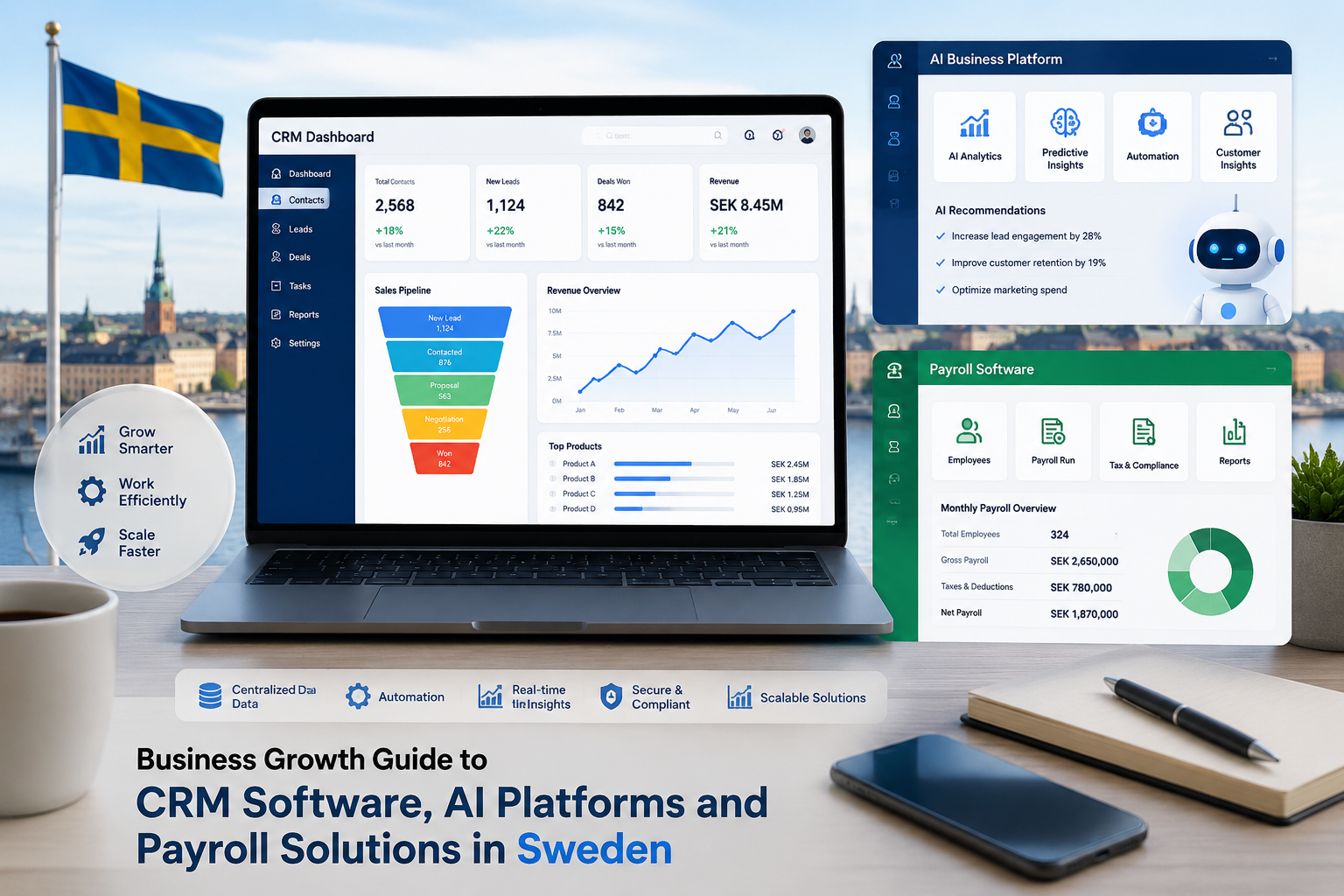
Among the most widely used digital tools are CRM Software, AI Platforms and Payroll Solutions in Sweden. These technologies help organizations manage customer relationships, improve productivity, automate routine processes, and maintain accurate employee payment records.
Understanding how these systems work and how they contribute to business operations can help organizations make informed technology decisions. This guide explores the role of CRM software, artificial intelligence platforms, and payroll solutions within Sweden's modern business landscape.
The Growing Importance of Digital Business Tools in Sweden
Sweden is recognized for its strong digital infrastructure and widespread adoption of technology across industries. Businesses increasingly rely on software platforms to manage information, improve collaboration, and support operational efficiency.
Digital transformation is influencing areas such as:
Customer relationship management
Employee administration
Data analysis
Process automation
Financial management
Internal communication
As organizations handle larger volumes of information, technology platforms help simplify complex workflows and improve access to business data.
Understanding CRM Software
CRM stands for Customer Relationship Management. CRM software is designed to help organizations organize customer information, monitor interactions, and manage communication activities.
Instead of storing information across multiple spreadsheets, emails, and documents, CRM systems centralize customer data into a single platform.
Key Functions of CRM Software
CRM software commonly supports:
Contact management
Customer interaction tracking
Task management
Communication history records
Reporting and analytics
Team collaboration
These functions help create a more organized approach to managing customer relationships.
Benefits of CRM Software
Organizations often use CRM platforms to:
Improve customer communication
Track customer interactions
Centralize business information
Support informed decision-making
Enhance operational efficiency
A well-implemented CRM system can help teams access important information quickly and maintain consistency in customer engagement.
CRM Software Trends in Sweden
Businesses in Sweden increasingly use cloud-based CRM solutions because they provide flexibility and accessibility.
Recent trends include:
Mobile CRM access
AI-assisted customer insights
Automated workflows
Data visualization tools
Integration with communication platforms
These developments continue to improve usability and operational effectiveness.
Understanding AI Platforms
Artificial Intelligence (AI) has become an important technology within modern organizations. AI platforms help businesses analyze information, automate tasks, and generate insights that support decision-making.
AI platforms use algorithms and machine learning techniques to process large amounts of data and identify patterns.
Common Applications of AI Platforms
Organizations use AI platforms for:
Data analysis
Forecasting
Customer support automation
Document processing
Content generation
Business intelligence
AI tools can reduce manual workloads while improving efficiency in many business processes.
Benefits of AI Platforms
AI technology can support organizations by:
Automating repetitive tasks
Improving data analysis capabilities
Enhancing productivity
Supporting strategic planning
Increasing operational efficiency
Businesses across Sweden are exploring AI applications to improve performance and streamline operations.
AI Adoption in Sweden
Sweden's strong digital ecosystem encourages AI adoption across multiple industries.
Examples include:
Manufacturing
Retail
Healthcare
Financial institutions
Logistics
Professional organizations
As AI technology becomes more accessible, its role in business operations continues to expand.
Understanding Payroll Solutions
Payroll management is an essential administrative function for organizations of all sizes.
Payroll solutions help businesses manage:
Employee compensation
Tax calculations
Attendance records
Leave management
Compliance requirements
Payroll reporting
Automated payroll platforms help reduce manual calculations and improve record accuracy.
Key Features of Payroll Solutions
Modern payroll systems commonly include:
Automated payroll processing
Employee information management
Tax calculation tools
Reporting capabilities
Attendance integration
Digital record keeping
These features support efficient payroll administration.
Benefits of Payroll Solutions
Organizations may experience several advantages when using payroll software.
These include:
Improved accuracy
Reduced administrative workload
Better compliance management
Faster payroll processing
Organized employee records
Automation helps minimize errors and supports consistency in payroll operations.
Payroll Technology Trends in Sweden
Payroll systems in Sweden increasingly incorporate:
Cloud-based platforms
Digital document management
Automated compliance updates
Employee self-service portals
Integration with HR systems
These developments simplify payroll administration and improve accessibility.
How CRM Software, AI Platforms and Payroll Solutions Work Together
Although CRM software, AI platforms, and payroll solutions serve different purposes, they often complement one another within a business environment.
CRM and AI Integration
AI capabilities can enhance CRM systems by:
Identifying customer behavior patterns
Generating predictive insights
Supporting automated communication
Improving reporting accuracy
These functions help organizations better understand customer interactions.
AI and Payroll Integration
AI can support payroll processes through:
Automated data verification
Error detection
Predictive workforce analysis
Administrative workflow optimization
This helps reduce manual effort while improving accuracy.
Unified Business Operations
When integrated effectively, these technologies contribute to:
Better information management
Improved decision-making
Increased productivity
Streamlined workflows
Enhanced operational visibility
Many organizations are moving toward connected technology ecosystems that support multiple business functions.
Factors to Consider When Evaluating Business Software
Every organization has unique operational requirements. Before implementing technology platforms, businesses should evaluate several factors.
Scalability
The software should support future business growth and changing operational needs.
Ease of Use
User-friendly systems can improve adoption and reduce training requirements.
Security
Data protection is essential when managing customer information, employee records, and business data.
Integration Capabilities
Software platforms should work effectively with existing business systems.
Reporting Functions
Strong reporting tools support informed decision-making and operational monitoring.
Accessibility
Cloud-based platforms often improve accessibility for employees working from different locations.
Challenges Businesses May Encounter
While technology platforms provide many benefits, organizations may face implementation challenges.
Common considerations include:
Data migration requirements
Employee training needs
System integration complexity
Process adjustments
Ongoing maintenance requirements
Planning and preparation can help organizations manage these challenges effectively.
Future Trends in Business Technology
Technology continues to evolve rapidly, creating new opportunities for businesses.
Emerging trends include:
Artificial Intelligence Expansion
AI is expected to become more deeply integrated into daily business operations.
Increased Automation
Automation may handle a growing number of administrative and operational tasks.
Advanced Analytics
Organizations are increasingly using data analytics to support strategic planning.
Cloud-Based Business Platforms
Cloud adoption continues to grow due to flexibility and accessibility advantages.
Enhanced Data Security
As digital systems become more important, security technologies are expected to receive greater attention.
These developments will likely continue shaping how organizations operate and manage information.
Conclusion
CRM Software, AI Platforms and Payroll Solutions in Sweden play an important role in supporting modern business operations. CRM systems help organizations manage customer relationships, AI platforms assist with automation and data analysis, and payroll solutions streamline employee payment administration.
Together, these technologies contribute to improved efficiency, stronger information management, and more informed decision-making. As digital transformation continues across Swedish industries, businesses that understand and effectively use these tools can better navigate evolving operational requirements and support sustainable growth.